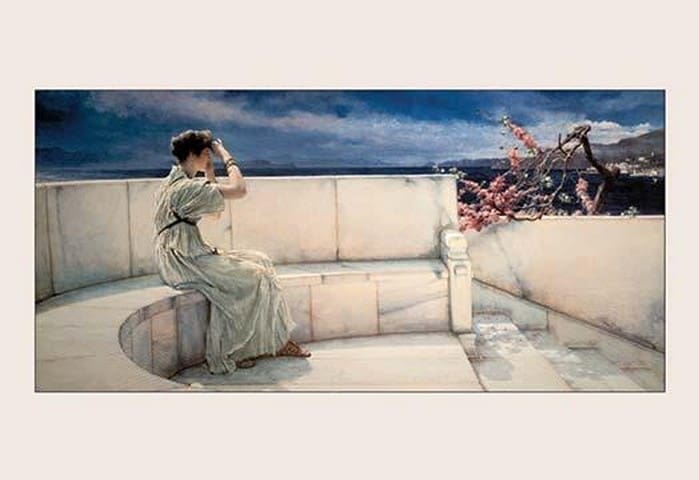
Sir Lawrence Alma-Tadema (1836–1912) was a Dutch-born British painter known for his meticulously detailed depictions of classical antiquity, particularly scenes from ancient Rome and Greece. Born in the Netherlands, Alma-Tadema trained at the Royal Academy of Antwerp before moving to England in 1870, where he became one of the most celebrated artists of the Victorian era. His works often depicted luxurious scenes of Roman life, with an emphasis on architecture, marble textures, and sensuous figures, earning him a reputation for his technical precision and historical accuracy. Alma-Tadema’s fascination with classical themes and his ability to bring them to life with vibrant color and intricate detail set him apart from his contemporaries. His paintings, such as “The Roses of Heliogabalus” and “Spring”, were praised for their ability to transport viewers into another world, one filled with opulence and beauty. Despite the initial popularity of his work, his reputation waned after his death as tastes in art shifted toward modernism, but he has since experienced a revival. Alma-Tadema’s influence is seen not only in the fine arts but also in film, where his depiction of antiquity has inspired many set designs in historical epics. His legacy as a master of classical revival art endures today.