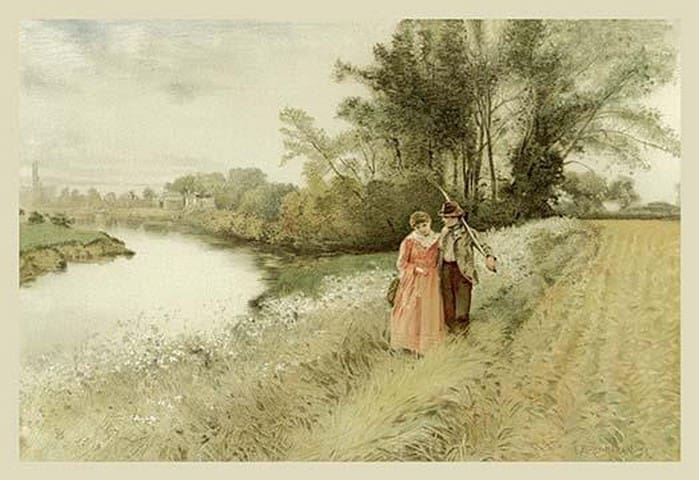
James Leon Williams was a multifaceted individual whose talents spanned dentistry, scholarship, and photography, making him a notable figure in the late 19th century. As the inventor of modern dentures, he contributed significantly to dental medicine, but it was his photography that showcased his artistic vision. Williams was among the first American photographers to recognize the artistic potential of the photogravure process, an innovative technique that allowed for the reproduction of images with rich tonal variations. Following the precepts of the “Naturalistic” school of photography founded by Peter Henry Emerson, Williams adhered to Emerson’s advice of keeping the central subject of the composition sharp while allowing the background to blur, creating a more atmospheric effect that mimicked the human eye’s natural focus. This approach is particularly evident in his two notable photogravure picture books, “The Home and Haunts of Shakespeare” (1892) and “The Land of Sleepy Hollow and the Home of Washington Irving” (1887). In these works, Williams captured the essence of literary landscapes, blending his scholarly knowledge of these iconic figures with his artistic flair, thereby producing images that not only documented places of historical significance but also conveyed the spirit and ambiance of their surroundings.