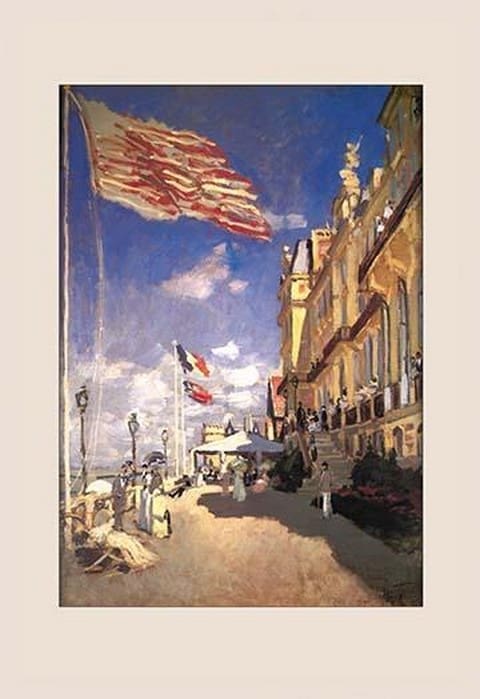
Claude Monet, a pioneer of Impressionism, profoundly shaped the art world with his innovative approach to capturing light, color, and atmosphere. Born on November 14, 1840, in Paris, Monet spent his childhood in Le Havre, where he developed a love for drawing and nature. Rejecting traditional artistic conventions, Monet sought to depict the fleeting effects of light and movement, a vision that culminated in his groundbreaking painting “Impression, Sunrise” (1872). This work, lending its name to the Impressionist movement, exemplified his focus on en plein air (outdoor) painting and loose brushwork that defied the rigid realism of academic art. Throughout his life, Monet drew inspiration from landscapes, often revisiting the same scenes at different times of day to explore variations in light and color. His series of water lilies, haystacks, and the Rouen Cathedral reflect this fascination. Monet’s garden in Giverny, with its iconic Japanese bridge and water lily pond, became his artistic sanctuary and subject for much of his later work. Despite struggles with poverty and failing eyesight, he remained dedicated to his vision. Monet’s work profoundly influenced modern art, laying the groundwork for movements like Abstract Expressionism. He passed away in 1926, leaving a legacy that continues to enchant and inspire.

Reviews
There are no reviews yet.