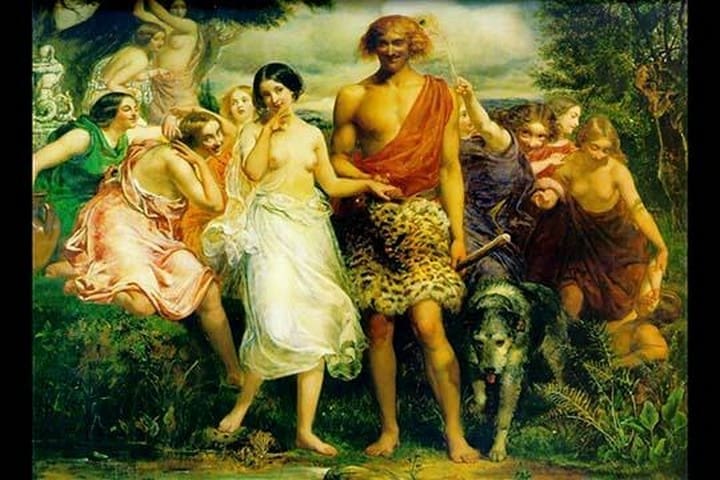
John Everett Millais was a key figure in the Pre-Raphaelite Brotherhood, a group of artists who sought to bring intense color, fine detail, and deep feeling back into painting. His early work, like “Lorenzo and Isabella,” shows his love of rich hues and sharp lines, telling the tragic story from Keats’ poem of a young woman whose love for Lorenzo leads to betrayal and death. Millais’ skill in capturing mood is also seen in “A Huguenot on St. Bartholomew’s Day,” which shows a Protestant man refusing to wear a Catholic armband, even as his lover pleads with him, hinting at his grim fate. His most famous work, “Ophelia,” is a haunting vision of Shakespeare’s doomed heroine floating in a stream, surrounded by flowers, her hands open as if giving in to fate, a painting praised for its vivid nature and realism. Later, Millais shifted to a more polished style, as seen in “The Order of Release 1746,” where a calm and strong wife hands a paper to a guard, freeing her weak and wounded husband, a scene full of quiet power. Though he later moved toward more formal portraiture and landscapes, these works mark his legacy as a painter who fused rich storytelling with striking visuals, making him one of the most admired artists of the Victorian era.
Reviews
There are no reviews yet.