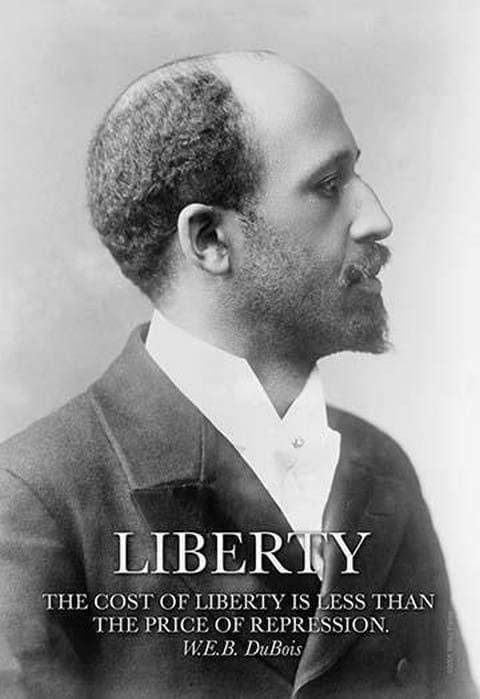
“The cost of liberty is less than the price of repression.”
W.E.B. Du Bois, born in 1868, was a pioneering African American sociologist, historian, civil rights activist, and prolific writer. As the first African American to earn a doctorate from Harvard University, Du Bois emerged as one of the leading intellectual voices of the early 20th century. He co-founded the National Association for the Advancement of Colored People (NAACP) in 1909 and served as the editor of its influential publication, The Crisis, advocating for civil rights and racial equality. Du Bois’s seminal work, “The Souls of Black Folk” (1903), remains a cornerstone of African American literature, exploring themes of double consciousness, racial identity, and social inequality. Throughout his life, Du Bois tirelessly fought against racial discrimination, segregation, and economic injustice, leaving an indelible mark on the civil rights movement and shaping the trajectory of American history. His legacy continues to inspire generations of activists and scholars in the ongoing struggle for racial justice and equality.
1903/USA