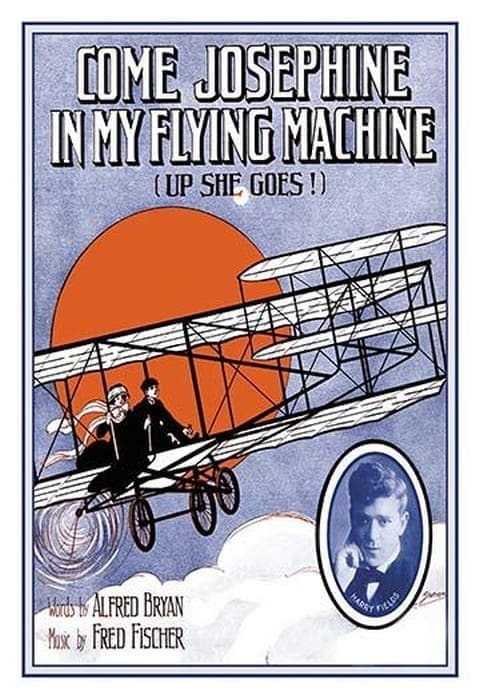
“Come Josephine, In My Flying Machine” by William Austin Starmer, written in 1910, is a whimsical and charming song that captured the public’s fascination with aviation during the early 20th century. The lyrics tell the story of a man inviting his sweetheart, Josephine, to join him on a flight in his “flying machine,” which reflects the optimism and excitement surrounding the new technological marvels of the time. The song’s playful tone, combined with a catchy melody, made it an instant hit and a favorite of the era.
The lyrics blend romance with the thrill of aviation, offering a blend of adventure and sweetness. The repeated refrain, “Come, Josephine, in my flying machine, and it’s up she goes,” evokes a sense of lightheartedness and joy, while imagining the flight as both a literal and figurative escape. The notion of flying was still a dream for many, making the song resonate deeply with audiences who were fascinated by the possibility of flight.
While the song remains a product of its time, it also reflects a broader cultural shift towards embracing the wonders of modern technology and the future. Today, “Come Josephine, In My Flying Machine” is remembered as a nostalgic piece of early 20th-century pop culture, embodying the spirit of innovation and romance of the era.