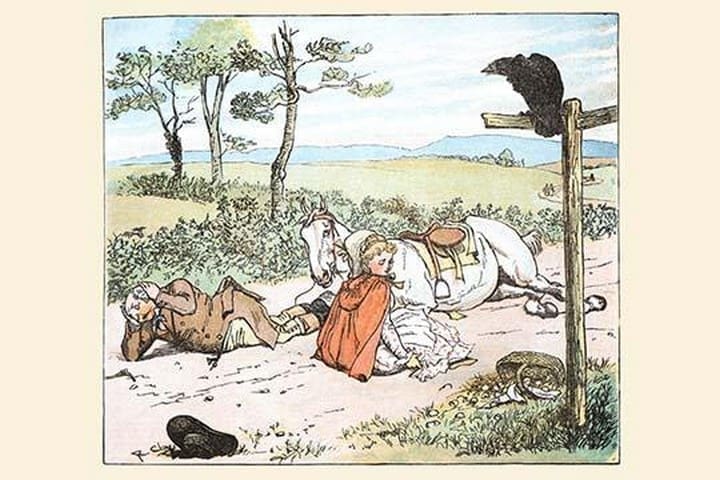
Randolph Caldecott, a 19th-century British illustrator, is often credited with transforming children’s book illustration with his lively and innovative style. Born in Chester, England, in 1846, Caldecott began his artistic career with sketches and paintings, later gaining prominence for his work in magazines and illustrated books. His collaboration with Edmund Evans, a pioneering color printer, led to the publication of his famous picture books, where his use of humor, action, and expression brought stories to life in a way that had never been seen before. Caldecott’s ability to capture movement and emotion in his illustrations was revolutionary, departing from the more static and formal styles of the time. His work bridged the gap between image and text, allowing the illustrations to enhance and expand the narrative rather than simply decorate it. His most celebrated works, such as The House That Jack Built and Sing a Song for Sixpence, became benchmarks for children’s literature, with their whimsical, yet sophisticated, charm captivating both young readers and adults. Caldecott’s legacy endures through the prestigious Caldecott Medal, awarded annually in his honor to the most distinguished American picture book artist, cementing his influence on the world of children’s illustration.