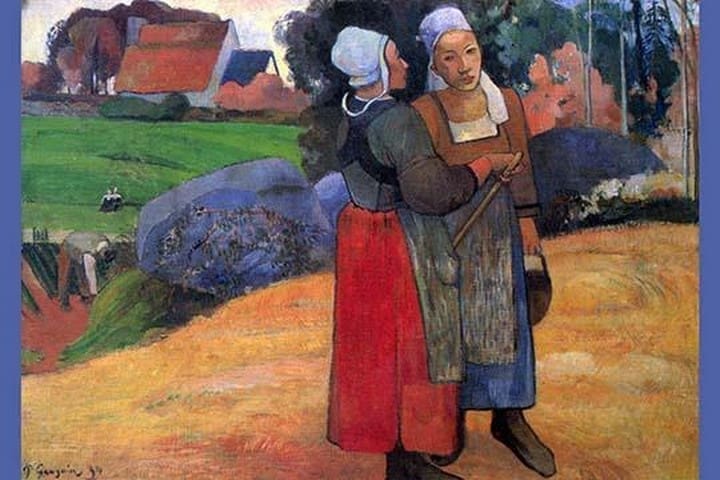
Paul Gauguin (1848-1903), a French Post-Impressionist artist, left an indelible mark on the art world. His work deeply influenced avant-garde artists like Pablo Picasso and Henri Matisse. Born in Lima, Peru, to Peruvian nobility, Gauguin discovered art relatively late in life. Initially influenced by Impressionism, he transitioned to Post-Impressionism and Symbolism. His groundbreaking painting “Vision After the Sermon: Jacob Wrestling with the Angel” (1888) exemplifies his unique approach. In this work, Gauguin synthesized the everyday life of Breton women with their biblical visions. He coined the term “Synthetism” to describe his fusion of subject, emotion, and aesthetics. Gauguin’s fascination with non-Western cultures led him to Tahiti, where he sought a “primitive paradise.” His art reimagined this lost Eden, incorporating elements from Japanese, Javanese, and Egyptian traditions. Despite financial struggles, Gauguin’s legacy endures, inspiring generations of artists.