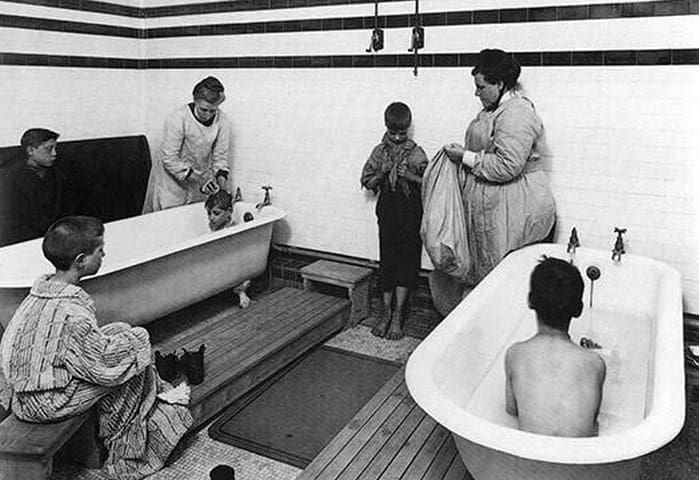
In the early 20th century, London’s public health challenges were exacerbated by overcrowding and unsanitary living conditions, particularly in impoverished districts like Hackney. To combat the rapid spread of infectious diseases, authorities established cleansing stations designed to disinfect individuals afflicted with vermin infestations and contagious illnesses. One such facility was the Sun Court cleansing station, operational around 1914. These stations employed methods such as steam cleaning to sanitize personal belongings and provided bathing facilities for thorough personal hygiene. Some, including Sun Court, offered accommodations for individuals requiring extended treatment periods. Health officers, empowered by stringent public health laws, could confiscate personal items for disinfection to curb disease transmission. Archival photographs such as this one depict children undergoing cleansing procedures, highlighting the era’s public health interventions aimed at improving living conditions and controlling disease outbreaks in London’s most vulnerable communities.