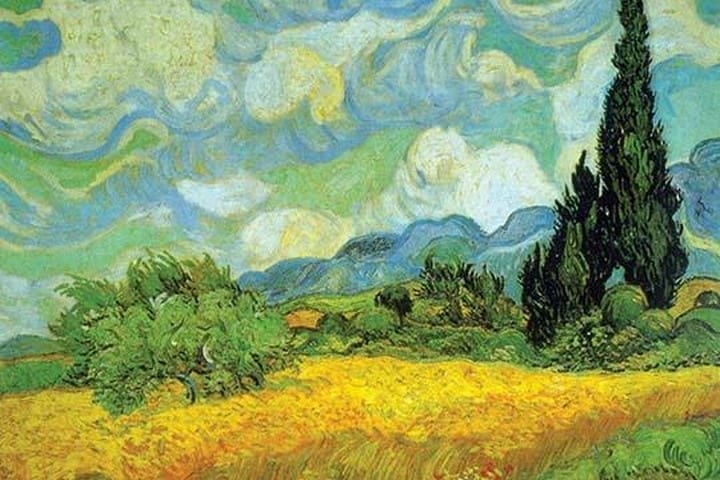
Vincent van Gogh’s “Wheat Field with Cypresses,” painted in 1889 during his stay at the Saint-Paul-de-Mausole asylum in Saint-Rémy-de-Provence, is a vibrant and dynamic celebration of nature’s beauty and vitality. The painting captures the quintessential Provençal landscape with its golden wheat fields, rolling hills, and iconic cypress trees reaching skyward, which van Gogh referred to as “beautiful as an Egyptian obelisk.” The swirling clouds and animated brushstrokes convey a sense of movement and energy, reflecting the artist’s emotional intensity and unique perception of the natural world. Van Gogh’s use of a bright, contrasting color palette-featuring the vivid yellows of the wheat field, the deep greens of the cypresses, and the rich blues of the sky-creates a striking visual harmony that draws the viewer into the scene. The composition is both structured and spontaneous, with the cypress trees serving as a vertical counterpoint to the horizontal expanse of the field and the undulating rhythms of the landscape. This work exemplifies van Gogh’s mastery of capturing the essence of his surroundings, transforming the ordinary into the extraordinary through his expressive technique and bold use of color. “Wheat Field with Cypresses” is not just a depiction of a rural scene but a profound expression of van Gogh’s inner life and his reverence for the natural world. It stands as a testament to his enduring ability to convey emotion and movement through paint, making it one of the most beloved and iconic pieces in his oeuvre.