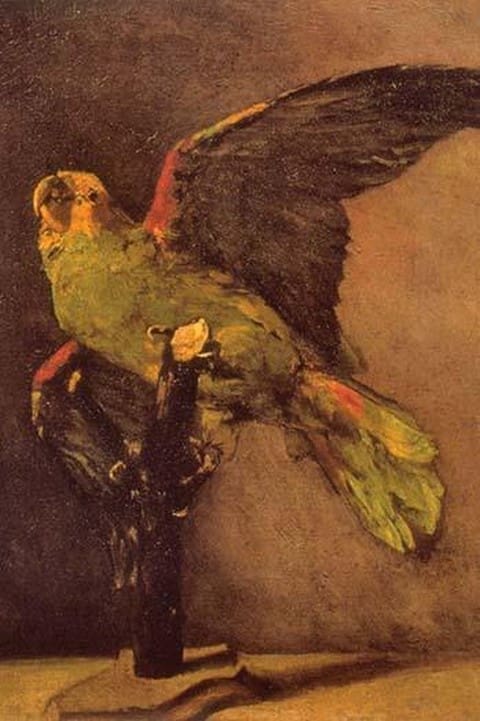
Vincent van Gogh’s “The Green Parrot,” painted in 1886, is a striking example of the artist’s ability to capture the vividness and personality of his subjects. The painting depicts a green parrot perched against a contrasting, darker background, showcasing van Gogh’s mastery of color and texture. The parrot, with its vibrant green plumage and sharp beak, is rendered with expressive brushstrokes that bring the bird to life, creating a sense of movement and vitality. The rich, textured layers of paint convey the intricate details of the feathers, while the parrot’s alert eyes and poised stance suggest a lively, inquisitive nature. Van Gogh’s choice of a dark, almost monochromatic background serves to highlight the parrot’s bright colors, making it the focal point of the composition and emphasizing its exotic beauty. This work reflects van Gogh’s fascination with capturing the essence of his subjects, whether they are people, landscapes, or animals. “The Green Parrot” is not merely a study of a bird; it is a celebration of the natural world’s diversity and vibrancy. Through his dynamic brushwork and bold use of color, van Gogh transforms a simple subject into a captivating and memorable piece of art. The painting stands as a testament to van Gogh’s unique ability to infuse his works with emotion and energy, inviting viewers to appreciate the beauty and complexity of even the most ordinary subjects. “The Green Parrot” remains a vivid example of van Gogh’s innovative style and his enduring fascination with the world around him.