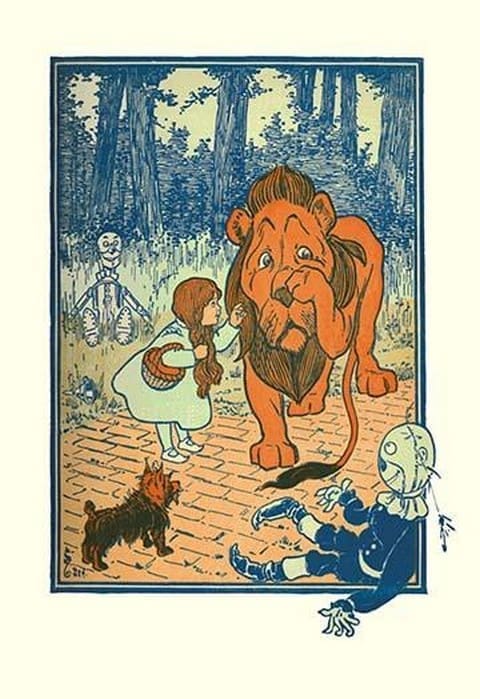
William Wallace Denslow, commonly known as W. W. Denslow, was an influential American illustrator and caricaturist born on May 5, 1856, in Philadelphia, Pennsylvania. He is best remembered for his collaboration with author L. Frank Baum, particularly for his iconic illustrations in “The Wonderful Wizard of Oz” (1900). Denslow’s distinctive artistic style, characterized by bold lines and vibrant colors, brought Baum’s fantastical world to life, making the book a visual delight for readers of all ages. Before his work with Baum, Denslow honed his skills at the National Academy of Design and Cooper Union in New York, although he was largely self-taught. His early career included designing posters, bookplates, and covers, as well as creating editorial cartoons. Denslow’s seahorse signature became a recognizable mark of his work. His partnership with Baum extended to other projects, including “Father Goose: His Book” and “Dot and Tot of Merryland.” However, their collaboration ended after a dispute over royalties from the successful stage adaptation of The Wizard of Oz. Despite this, Denslow continued to make significant contributions to children’s literature, illustrating Denslow’s Mother Goose and creating the comic strip Billy Bounce, one of the earliest to feature a protagonist with superpowers. His success allowed him to purchase Bluck’s Island in Bermuda, where he whimsically crowned himself “King Denslow I.” Denslow’s work remains celebrated for its imaginative and whimsical qualities, which have left a lasting impact on the world of illustration. He passed away on March 29, 1915, in New York City, but his legacy endures through the timeless charm of his illustrations.