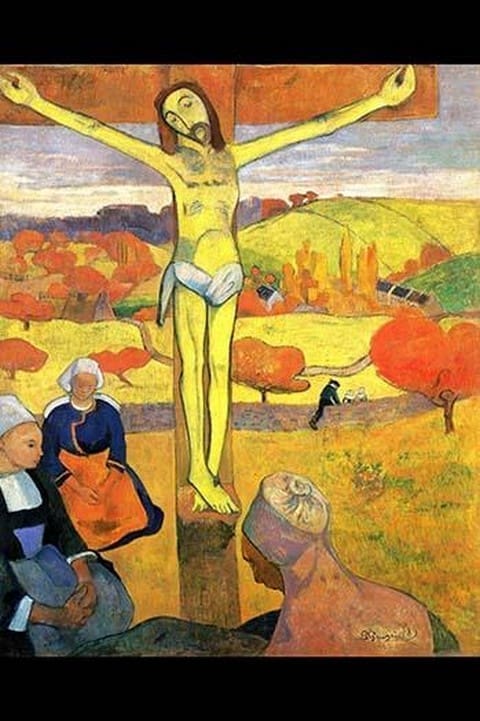
“The Yellow Christ” is a seminal painting by Paul Gauguin, completed in 1889 during his stay in Pont-Aven, Brittany, France. This masterpiece is renowned for its bold colors, symbolic imagery, and spiritual depth. The painting depicts a Breton landscape with local villagers gathered around a crucifix, painted in striking hues of yellow against a vivid blue sky. Gauguin’s use of color and composition imbues the scene with a sense of mystery and transcendence, inviting viewers to contemplate the spiritual significance of Christ’s sacrifice within the context of rural Brittany. The figures in the painting are rendered with simplified forms and stylized features, emphasizing their timeless and archetypal qualities. “The Yellow Christ” exemplifies Gauguin’s innovative approach to art, blending elements of symbolism and post-impressionism to create a profound and evocative work that continues to captivate audiences with its beauty and emotional resonance. 1889/France