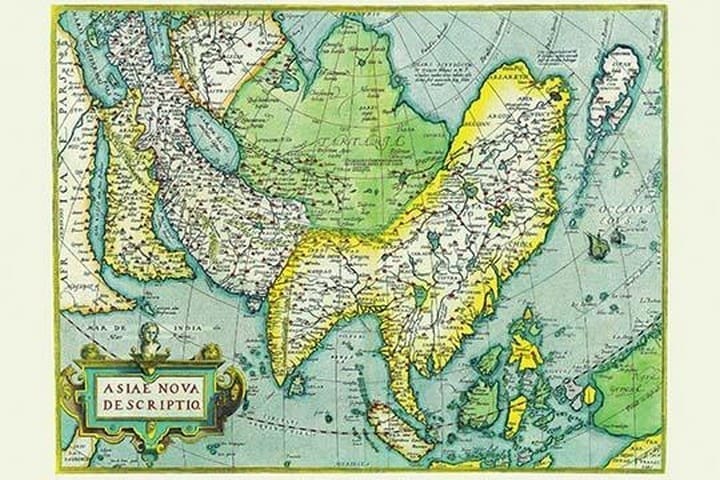
Abraham Ortelius, a 16th-century Flemish cartographer, revolutionized mapmaking with his “Theatrum Orbis Terrarum” (1570), widely regarded as the first modern atlas. His maps synthesized the most accurate geographical knowledge of the time, drawing from various sources to create a unified and standardized representation of the world. Unlike earlier medieval maps, which often contained speculative or symbolic elements, Ortelius prioritized empirical data, compiling information from explorers, sailors, and scholars. His world map, “Typus Orbis Terrarum,” reflected both contemporary discoveries and lingering misconceptions, such as the massive southern continent, Terra Australis, which had yet to be fully explored. Ortelius’ maps were known for their artistic elegance, featuring intricate border designs, decorative cartouches, and mythological sea creatures, blending scientific accuracy with Renaissance aesthetics. His detailed regional maps covered Europe, Asia, Africa, and the Americas, offering an unprecedented level of consistency and accessibility. Beyond their cartographic significance, his works influenced future mapmakers, including Gerardus Mercator. Ortelius also demonstrated a historical perspective by noting changes in place names and political boundaries over time. His atlas, frequently updated and expanded, remained a definitive reference for decades, marking a pivotal shift in the way people visualized and understood the world during the Age of Exploration.
Reviews
There are no reviews yet.