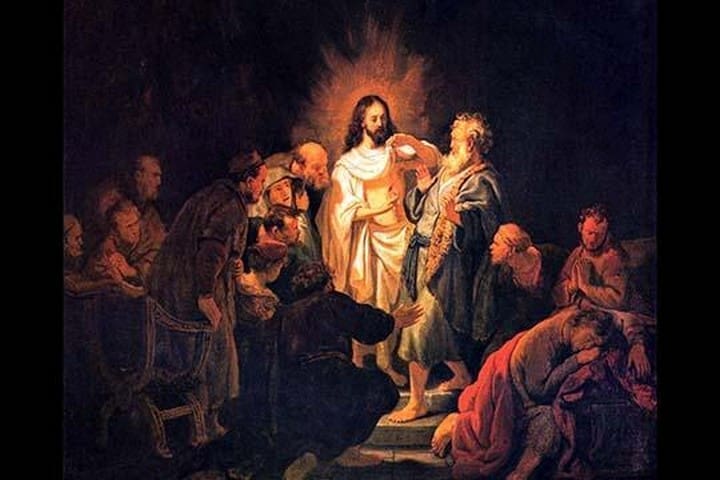
Rembrandt van Rijn’s “Doubting Thomas”, also known as “The Incredulity of Saint Thomas”, is a powerful portrayal of skepticism, faith, and revelation. Painted in 1634, this Baroque masterpiece captures the intense moment when the apostle Thomas overcomes his disbelief in Christ’s resurrection. The composition centers on Thomas, who, in a mix of awe and doubt, leans forward to examine the wound in Jesus’ side, as if physical proof alone could erase his uncertainty. Rembrandt’s use of chiaroscuro – the sharp contrast of light and shadow – dramatically isolates the figures from the background, directing our focus to their faces and gestures, which speak volumes. The light appears to emanate from Christ himself, casting an ethereal glow on Thomas’ hand and face as he reaches out in a tentative act of faith. Through this brilliant play of light, Rembrandt evokes the spiritual awakening within Thomas, transforming skepticism into belief. The expressions and body language of the apostles surrounding Thomas reflect a mixture of reverence and silent affirmation, underscoring the scene’s solemnity and suggesting the shared wonder among the disciples. Rembrandt’s skillful brushwork lends a realistic texture to the figures’ skin and clothing, enhancing the humanity of these holy figures, while also reflecting his profound insight into human psychology. The painting captures both the personal nature of faith and the communal experience of witnessing the divine, bridging earthly realism with spiritual revelation. “Doubting Thomas” remains one of Rembrandt’s most psychologically complex religious works, where the artist’s deep empathy and keen observation reveal the timeless conflict between doubt and belief, inviting viewers to ponder their own experiences of faith and evidence.
Reviews
There are no reviews yet.