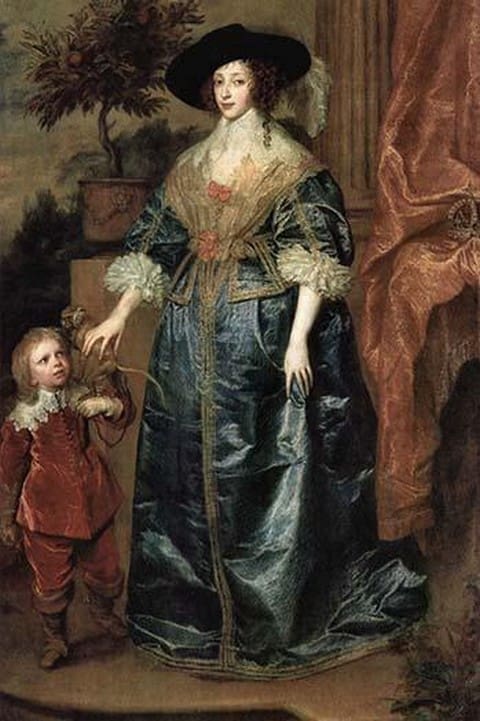
Anthony van Dyk was a master painter of the 17th century, best known for his skill in portraiture and his influence on European art. Born in Antwerp in 1599, he showed talent at an early age and trained under Peter Paul Rubens, whose dramatic style shaped his work. Van Dyk gained fame for his ability to capture not just the likeness of his subjects but also their status and personality. His self-portraits, including “Self Portrait of a Man,” “Self Portrait of Van Dyk”, and “Van Dyk Self Portrait,” reveal his confidence as an artist, each showing a refined and noble image of himself, emphasizing his role as both a painter and a gentleman. His success led him to England, where he became the court painter to King Charles I, creating grand and elegant portraits that defined the royal image. His work “Portrait of Marchesa Balbi” is a prime example of his ability to portray wealth and grace, with the noblewoman draped in luxurious fabrics, her pose both regal and natural. Van Dyk’s use of soft brushwork, rich color, and striking detail set a new standard in portrait painting. His influence extended far beyond his lifetime, shaping the style of future court painters. Though he died young in 1641, his legacy endures through his portraits, which continue to be admired for their beauty, depth, and lifelike quality, securing his place as one of the greatest portrait artists of his time.
Reviews
There are no reviews yet.